
Cyber-attacks on fridges hit UK food suppliers
The UK cyber agency says the national impact is minimal so far, while researchers link some probing activity to Russian-linked operations.

Key points
- Some UK food suppliers were affected by cyber-attacks on refrigeration systems, according to The Guardian.
- Hackers raised temperatures in fridges at retailers across several European countries on Monday.
- One London produce distributor stopped an attack by disconnecting its cold storage from the internet.
- No British supermarket chain has been hit directly so far, while the NCSC describes the national effect as small.
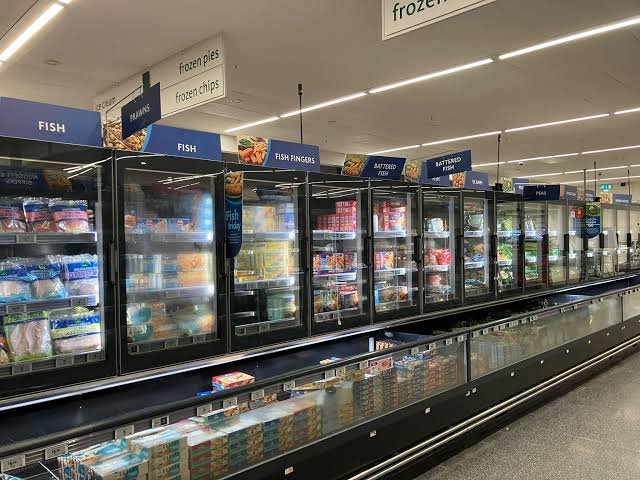
Food suppliers in Britain have reported being caught up in cyber-attacks aimed at refrigeration equipment, as reported by The Guardian. The intrusions followed hackers pushing up the temperatures of supermarket fridges in several European countries. The UK’s National Cyber Security Centre (NCSC) says it is in contact with the businesses involved and that, so far, the effect nationally has been small.
On Monday, shops in seven countries, namely Belgium, Estonia, Finland, Ireland, Luxembourg, the Netherlands and Sweden, told of trouble with their cooling kit. In some locations readings reached 50C (122F). A number of firms have confirmed that their systems were broken into. Comparable episodes came to light in France during the previous month.
Read also: UK cyber agency warns AI malware could hit critical infrastructure by 2028
Impact on UK businesses
The British Association of Independent Meat Suppliers says a portion of its membership, which exceeds 300 firms, has felt the effects. These businesses were caught up as collateral damage, even though they were not the target. The association stated that no meat was spoiled, since the affected units were empty when the problem occurred. One meat firm recorded cold units climbing to 100C, and two others saw units begin thawing.
A London wholesaler dealing in fruit and vegetables was hit too. Its managing director, Alex Pearce of Langridge Organic, explained that the attackers altered settings on several units so they would thaw for over four hours at 150C. Pearce and colleagues acted quickly, disconnecting the cold storage units from the network at the wall. This halted the intrusion before any produce was harmed. He noted that getting into the system appeared simple.
Langridge relies on a fridge control platform built by Copeland, an American software business. That same platform featured in the French supermarket cases, according to The Grocer, the trade news site that first broke the Langridge story. Copeland says it is in touch with customers affected and has advised software updates.
Official response
Paul Chichester, operations director at the NCSC, spoke on Tuesday when the agency released its yearly review. He said the body knows about the UK cases, is working with the organisations concerned, and will continue watching developments. For the moment, he described the effect as slight.
Chichester added that the NCSC, a branch of GCHQ, the spy agency, is helping firms locate gaps in their technology and shut them before criminals exploit them. He said the agency could not identify the culprits. The attacks were not powered by AI, he said, and relied on flaws that had existed for a long time.
Richard Horne, the NCSC chief executive, called the fridge incidents the early signs of a wider danger. He said AI tools are exposing weaknesses in computer networks that owners were unaware of or had failed to fix. Ollie Whitehouse, the chief technology officer, said household connected devices can be open to attack in certain circumstances. He argued that manufacturers should be pushed to strengthen their products and that buyers may have to accept higher prices for safer kit.
Possible link to Russia-linked activity
Separately, security researchers examined attacks on decoy Danfoss fridge controllers, which were set up online to draw in intruders. Danfoss systems were also hit in mainland Europe. Xavier Bellekens, head of the cyberdefence company Lupovis, said his firm logged 256 attempts from 91 origins between 20 and 30 October. To attackers, the decoys looked identical to genuine Danfoss devices.
Most login attempts used the vendor’s public default username and password. The attackers also relied on hosting providers that tolerate abuse, often ignore complaints or make enforcement hard. Bellekens said the infrastructure overlapped with infrastructure previously tied to Russian-linked operations. However, the group has not been identified, and the set of possible actors is fairly small.
Frequently asked questions
Which UK food suppliers were affected by the fridge cyber-attacks?
Members of the British Association of Independent Meat Suppliers were among those hit. A London produce distributor, Langridge Organic, was also targeted. No British supermarket chain has been hit directly so far, according to the reports.
Has the UK government agency said who carried out the attacks?
The agency said it could not say who was behind the incidents. Researchers found overlaps with infrastructure tied to Russian-linked operations but have not named a specific group.
Sources
This article was written with the help of AI from reports by the outlets listed above. See our Editorial Policy. Spotted a mistake? Tell us.