Historian calls Eagle’s Nest a Nazi vanity project
Richard Evans argues the Nazi-era site should be returned to nature, raising questions about how history and memory are preserved.

Key points
- Richard Evans, a British historian, describes Eagle's Nest as a Nazi vanity project.
- He argues the mountain should be restored to its natural state.
- The debate centres on preserving historical evidence versus preserving regime symbols.
- The report was published by France 24 on 9 November 2026.
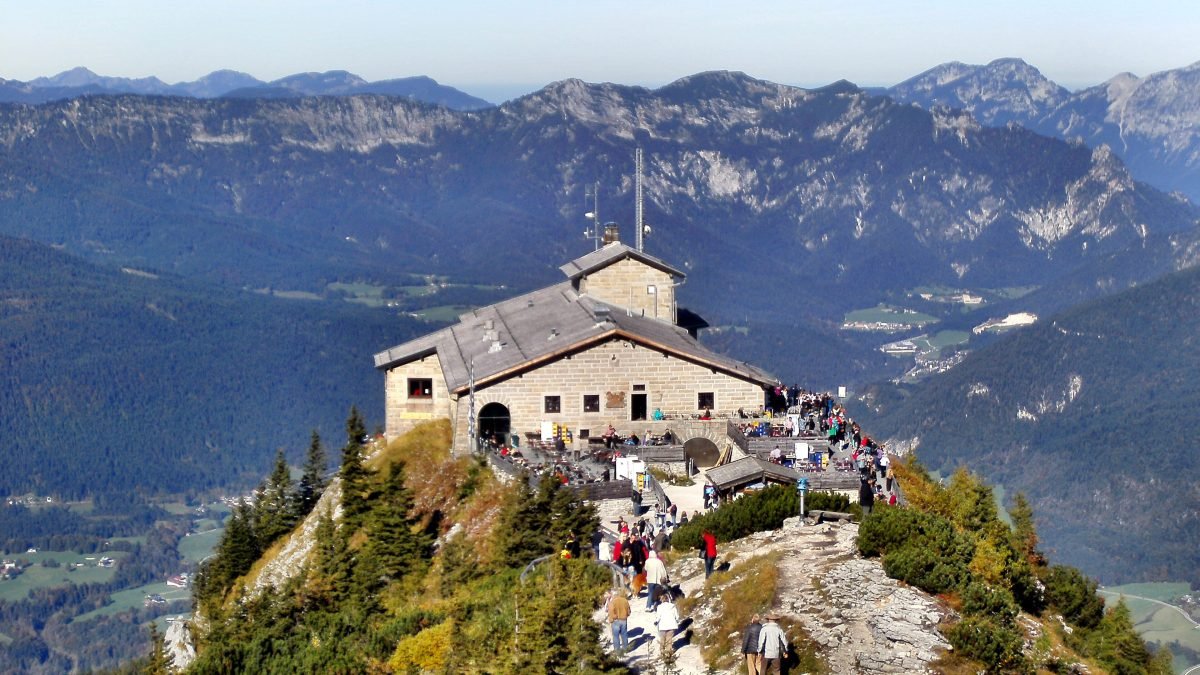
A British historian has described Eagle’s Nest, the mountaintop complex in the Bavarian Alps linked to Adolf Hitler, as a Nazi vanity project. According to France 24, Sir Richard Evans believes the mountain should be returned to its natural condition.
The remarks were presented as part of a discussion hosted by Eve Irvine, who introduced Evans as Regius Professor Emeritus of History at the University of Cambridge. The item was published on 9 November 2026 and centres on what should happen to the Nazi-era site in the future.
Two goals in tension
The debate rests on a distinction that Evans treats as central. Keeping physical traces of the past is one aim. Keeping the symbols that a criminal regime used to glorify itself is a different aim.
In this view, the two aims are not automatically the same. A building or site may be kept as evidence while its original meaning as a tribute to the regime is set aside. Evans’s position, as reported, leans toward ending that meaning by letting the landscape go back to nature.
A symbol of control over nature
France 24 reports that the complex is seen as a symbol of the regime’s attempt to conquer nature. That framing ties the building to wider ideas the Nazi leadership wanted to project through its architecture and its mountain setting.
The idea of conquest is central to the case Evans makes. In his account, the mountain itself carries the imprint of that ambition, which is why he says it should be allowed to return to a natural state.
What is still unclear
The available report does not say whether any authority has accepted Evans’s proposal. It does not describe a formal plan, a timetable or specific steps for changing the complex.
It also does not record responses from other historians, officials or site managers. Readers should therefore treat the piece as one expert’s position within an ongoing discussion, not as a settled outcome.
Why the discussion matters
The question reaches beyond a single mountaintop. It asks how societies handle places connected to a criminal regime, and whether removing symbols changes how the past is remembered.
Eagle’s Nest sits where history, architecture and public memory meet. Because the site is tied to Adolf Hitler, decisions about its future carry historical weight. Evans’s comments show that experts may disagree about how far preservation should go.
Frequently asked questions
What is Eagleu0026#039;s Nest?
Eagleu0026#039;s Nest is a Nazi-era mountaintop complex in the Bavarian Alps, linked to Adolf Hitler. The source describes it as part of a debate about its future.
What does Richard Evans want done with the site?
Evans says the mountain should be restored to its natural state. He describes the complex as a Nazi vanity project.
Who reported this story?
The story was reported by France 24 and published on 9 November 2026.
Sources
- France 24: 'Nazi vanity project': Eagle's Nest in Bavarian Alps a symbol of regime's 'conquest of nature'
This article was written with the help of AI from reports by the outlets listed above. See our Editorial Policy. Spotted a mistake? Tell us.