Russian strikes kill dozens in Ukraine, including at an aid centre
Attacks hit an aid centre, a hospice and a hospital, while Kyiv faces water and power cuts. Peace talks are planned for 10-11 November in Abu Dhabi.

Key points
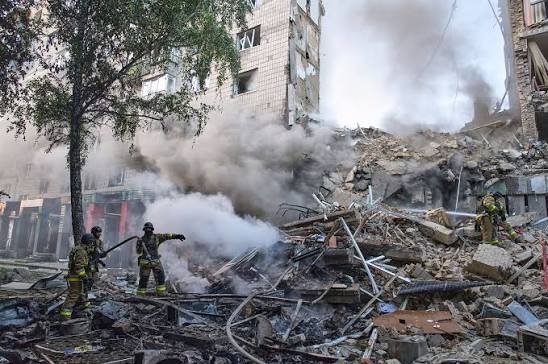
- At least 38 civilians were killed in Russian strikes over 24 hours, according to BBC News.
- At least 33 people died in a glide bomb attack on the village of Komyshuvakha, and more may be trapped.
- A hospice in Dnipro and a hospital in Kharkiv were also hit.
- Water supply in Kyiv was cut off, and the metro network was suspended.
- The Kremlin says it will join three-way peace talks in Abu Dhabi on 10-11 November.
Russian strikes across Ukraine have killed at least 38 civilians and injured dozens more over the past 24 hours, according to BBC News. The attacks hit an aid centre, a hospice and a hospital. The figure is expected to rise.
The deadliest incident took place in Komyshuvakha, a village in the southern Zaporizhzhia region. At least 33 people are known to have died there after a glide bomb attack on Monday night. President Volodymyr Zelensky warned that the death toll could climb, as more than 50 people may be buried under debris. He described the strike as one of the largest mass killings carried out by Russia during the war.
Local media reported that residents had gathered at a school building to collect humanitarian aid when the attack began. Many people took shelter underground, but the roof collapsed on them. Nine aerial bombs, each weighing 3,000 kg, struck the area, local authorities said. Regional head Mykhailo Semikin said the scale of the tragedy was hard to grasp.
Competing accounts of the attack
Russia’s defence ministry said the strike targeted Ukrainian military units and killed 25 servicemen. BBC News defence correspondent Ilya Abishev reported that there was no credible evidence the site was used by the Ukrainian military. He also noted that the settlement had no major military or industrial facilities.
Abishev added that the village lies south-east of Zaporizhzhia city and forms part of Ukraine’s defensive and transport network. The UN human rights monitoring mission said the aid distribution at the school had been widely publicised. It said the attack appeared to break the most basic rules of international humanitarian law.
Hospice and hospital attacks
In Dnipro, a Russian missile destroyed a hospice on Monday night. Nearly 50 terminally ill patients were being moved to other facilities. The oldest patient was 90 years old. Mayor Boris Filatov shared photos on Telegram showing elderly patients in beds beside broken windows and debris.
A separate strike in Dnipro killed two people and wounded 18 others. In the eastern Donetsk region, five people were killed in aerial bomb and drone attacks. In Kharkiv, a hospital was hit. Zelensky put the number of wounded there at 73, the majority of whom were older hospital patients.
Pressure on energy and water supplies
Strikes on energy facilities in nine regions have also disrupted water and heating supplies. The main water supplier in Kyiv, Kyivvodokanal, said supply in the capital had been fully cut off because of attacks and damage to the energy network. The entire metro system was suspended on Tuesday. Mayor Vitali Klitschko said the power supply situation was becoming very difficult.
Zelensky said Ukraine had proposed extending and widening a recent ceasefire in the Kherson region. That truce allowed civilians to leave the frontline town of Oleshky. He said the attack on Komyshuvakha was Moscow’s reply to that proposal.
Diplomacy and what comes next
The Kremlin says it will join a three-way round of peace negotiations with Ukraine in Abu Dhabi on 10-11 November. The talks are brokered by the United States. It would be the first trilateral meeting since February. Russia and the US have also begun engaging more directly, and US President Donald Trump announced a deal to import Russian diesel.
Speaking in Berlin, Zelensky said Russia must engage seriously in ceasefire talks. He said he had not yet seen any sign of that. Earlier rounds of talks late last year produced no results. US First Lady Melania Trump, credited with helping broker the Oleshky truce, will receive delegations from Russia and Ukraine at the White House on Thursday. The White House statement did not say who would attend.
In a statement last month, the United Nations warned that civilian deaths and injuries in Ukraine had hit an all-time high. Russia launched its full-scale invasion in February 2022. Its front-line advances have stalled, while attacks on cities have intensified. Zelensky acknowledged that the front line is stable but that the situation in the air is worse, particularly because Ukraine lacks air defence capacity and American Patriot interceptor missiles.
Frequently asked questions
How many civilians were killed in the recent Russian strikes on Ukraine?
According to BBC News, at least 38 civilians were killed in Russian strikes over the past 24 hours. The figure may rise because more people could be trapped under rubble.
When and where are the peace talks between Russia and Ukraine?
The Kremlin has said it will take part in three-way talks brokered by the United States in Abu Dhabi on 10-11 November. It would be the first trilateral meeting since February.
Sources
This article was written with the help of AI from reports by the outlets listed above. See our Editorial Policy. Spotted a mistake? Tell us.