Powys plans to cut hospital beds draw strong local opposition
Residents, GPs and politicians are resisting plans that would reduce inpatient care across rural Wales. The consultation runs until 10 January 2027.

Key points
- Powys Teaching Health Board proposes cutting inpatient beds from 146 to either 90 or 60
- Wards could close in Welshpool, Machynlleth, Ystradgynlais and Llanidloes under the proposals
- The health board says current services are increasingly hard to staff across a large rural area
- A 14-week public consultation is under way and closes on 10 January 2027
According to BBC News, proposals to reduce beds at smaller hospitals in rural parts of Wales are meeting firm resistance. Powys Teaching Health Board wants to reduce inpatient beds from 146 to either 90 or 60. Services would be focused at either two or three of the eight community hospitals in the county.
The plans could see inpatient wards removed from Welshpool, Machynlleth, Ystradgynlais and Llanidloes. Llandrindod Wells is also at risk of losing its beds in the wider scenario. Public input is being sought at present, with the window closing on 10 January 2027.
Why the health board wants change
The board says change is necessary so that care stays safe and viable. It argues the current structure is becoming harder to staff and run across such a large area.
A report prepared for the board describes the present arrangement as offering valued local services. However, its spread-out layout means meeting needs consistently is becoming harder. The board also points to an older population with multiple health conditions, rising demand and staffing difficulties.
Concerns from local people
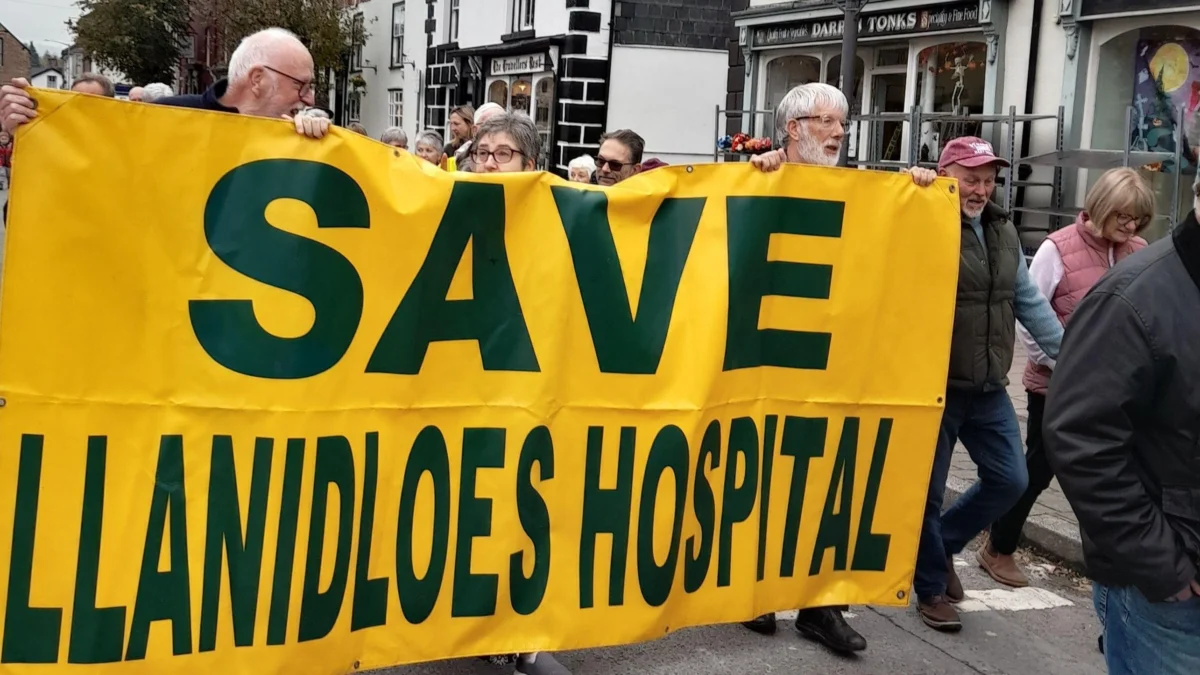
Opposition has come from GPs, politicians and communities worried about the effect on an ageing population. Powys is among the oldest areas in Wales, and over a quarter of residents are older than 65. Back in August, a crowd of more than 400 gathered in Llanidloes to protest against bed closures in the town.
Jill O’Connor, from the Llanidloes Hospital Alliance Group, told BBC News that plans to deliver more care in people’s homes are not workable. She said it would be hard to reach patients who live 20 or 30 miles from town, particularly in winter. She also questioned whether the infrastructure to support such care is in place.
Families have also raised concerns. Tuppin Scrase described losing his wife half a decade earlier, following end-of-life treatment in Llanidloes. He said that, without the local unit, he would have been unable to visit her during her last month.
Travel times and wider changes
The health board estimates that the average journey to inpatient care could rise from about 12 minutes to 24 minutes. For some people living furthest from hospitals, the journey could exceed 45 minutes each way. The board also says about 40% of its budget goes on services bought from outside Powys, which was around £198m in the last financial year.
Other proposals cover minor injuries units and urgent care. The board says the current urgent care system does not offer consistent or equal access across the county. Options include urgent care centres in Newtown and Brecon, and changes to the Welshpool minor injuries unit. Mental health services could also be consolidated at one site near Bronllys or Brecon.
The board says any changes would take place over several years. Readers can follow the consultation, which closes on 10 January 2027.
Frequently asked questions
Why does Powys Teaching Health Board want to cut hospital beds?
The board says its current model is getting harder to staff and run across a large rural area. It also cites rising demand and the need to keep services safe and sustainable.
Which towns could lose inpatient beds in Powys?
The plan would remove inpatient wards in Welshpool, Machynlleth, Ystradgynlais and Llanidloes. Llandrindod Wells may also lose its beds in the broadest version of the plan.
When does the public consultation end?
The public consultation closes on 10 January 2027 and lasts 14 weeks.
Sources
This article was written with the help of AI from reports by the outlets listed above. See our Editorial Policy. Spotted a mistake? Tell us.