Clogged Membrane Could Make Crude Oil Refining Cheaper
Researchers say an uncoated polymer filter that builds up with oil could reduce the energy needed to refine crude, though the savings are still projections.

Key points
- KAIST and Georgia Tech researchers report a membrane that separates crude oil at room temperature.
- The uncoated polymer membrane becomes more selective as heavy molecules narrow its pores.
- Simulations project a 31.6% drop in energy use and a 37.6% drop in carbon dioxide emissions.
- The findings were published in Nature; the savings have not yet been shown at operating refineries.
- Researchers plan to improve large-scale production and test long-term reliability.
Researchers from the Korea Advanced Institute of Science and Technology, known as KAIST, and Georgia Tech have reported a new type of membrane that can separate crude oil at room temperature. According to ScienceDaily, the work was led by Professor Dong-Yeun Koh at KAIST together with Professor Ryan Lively’s group at Georgia Tech. The findings were published in the journal Nature.
The research matters because crude oil is used for much more than fuel. It is also a source of materials for plastics, packaging, clothing and many everyday products. Refining costs feed into the prices of these goods, so a more efficient process could bring economic and environmental gains.
Why current refining uses so much energy
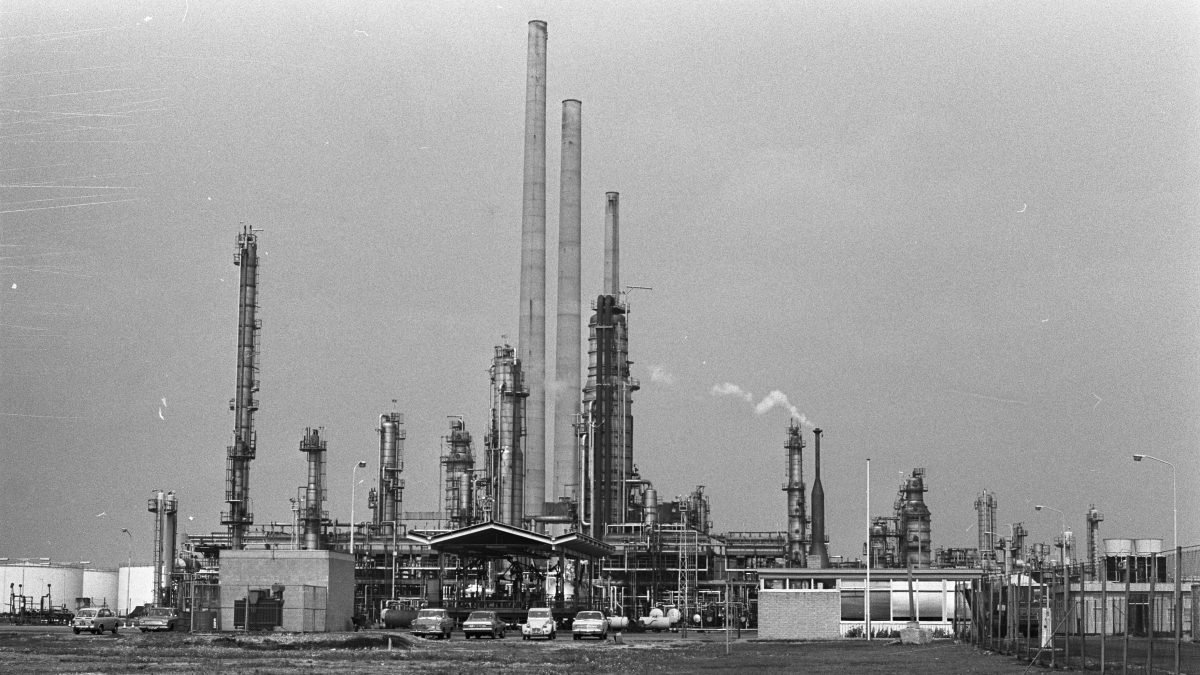
For more than a century, refineries have mainly used distillation. This method heats oil to more than 350 °C, turns part of it into vapor and then cools the vapor to collect different fractions. The approach needs a very large amount of energy.
ScienceDaily reports that worldwide crude oil distillation uses about 1,100 terawatt-hours a year. That is similar to the yearly output of roughly 130 nuclear plants, each with a capacity of about one gigawatt. Membranes have been seen as a possible alternative because they can separate substances without such extreme heat, but earlier designs relied on thin, specialised coatings that are costly and can develop defects when produced at scale.
A filter that clogs on purpose
The team used a bare membrane made from porous polyacrylonitrile, a cheap and chemically stable polymer that is already common in industrial filtration. As crude oil moved through the pores, heavier hydrocarbons built up on the inner walls. This narrowed the openings to channels smaller than 2 nanometres across.
Fouling, the build-up of material in pores, is usually treated as a serious problem. In this case, the same process helped the membrane separate lighter fractions such as naphtha, gasoline and kerosene more effectively. The uncoated membrane reached crude oil permeation rates about 23 times higher than those reported for previous leading membranes. It also ran with stable performance for 28 consecutive days.
Projected savings and wider uses
The membrane could be added as a modular unit ahead of existing distillation equipment, so refineries would not need to replace all their current plant. Computer simulations suggest energy use could fall by 31.6% and carbon dioxide emissions by 37.6%. The same calculations project a 20.7% cut in cooling water use and a 36% drop in operating costs.
The researchers estimate that wider use across Korea’s refining and petrochemical sectors could prevent about 10 million tonnes of greenhouse gas emissions a year. These figures come from process simulations, not from savings already measured at operating refineries.
The team also sees possible uses in treating pyrolysis oil from recycled plastics, recovering solvents used in battery manufacturing, purifying pharmaceutical compounds and improving biofuel production. Before wider deployment, the researchers plan to scale up production and confirm reliability over longer operating periods. Professor Jae W. Lee of KAIST, a co-corresponding author, said the group hopes to broaden adoption across the refining and petrochemical industries.
Frequently asked questions
What is the new membrane made from?
The membrane is made from porous polyacrylonitrile, an inexpensive and chemically stable polymer that is already used as a support material in industrial filtration. It is used without an added coating.
How much energy could the membrane save?
Computer simulations project a 31.6% reduction in energy consumption and a 37.6% reduction in carbon dioxide emissions. These are projections, not results already shown at operating refineries.
Has the technology been used in real refineries?
Not yet, according to the sources. The researchers plan to improve large-scale production and establish reliability during extended operation before wider deployment.
Sources
This article was written with the help of AI from reports by the outlets listed above. See our Editorial Policy. Spotted a mistake? Tell us.