Atomic Clocks May Help Test the Quantum Nature of Time
A research team proposes a way to detect a quantum superposition of times. The work remains theoretical, and no experiment has yet confirmed it.

Key points
- Researchers led by Kyushu University published a theoretical method in Physical Review Letters.
- The method suggests trapped-ion atomic clocks could detect a quantum superposition of times.
- The approach reportedly raises sensitivity to the effect by 100 to 1,000 times.
- The findings are theoretical, and a working experiment is the next step.
- Researchers also want to explore whether clocks could probe quantum gravity.
According to ScienceDaily, an international research team has proposed a theoretical method that could allow scientists to detect a strange feature of time. The work was published in Physical Review Letters. It suggests that today’s advanced atomic clocks might be able to reveal a quantum superposition of times. The study has not yet been tested in a laboratory.
The research was led by Kyushu University. Scientists from the Stevens Institute of Technology, the University of Waterloo, the National Institute of Standards and Technology, Colorado State University and Stockholm University also took part. Their model combines ideas from quantum mechanics and Einstein’s theory of relativity.
What the researchers propose
In quantum mechanics, a clock can exist in a state called superposition. In this state, its motion follows several possibilities at once. Because motion affects how time passes under relativity, this could allow different rates of time to exist together in one quantum state.
Scientists have never directly observed this link between the two theories. The new model aims to make the effect measurable. The team found that the motion of an atomic clock can become entangled with its internal energy. This entanglement would leave a trace that modern techniques might detect.
Why atomic clocks matter here
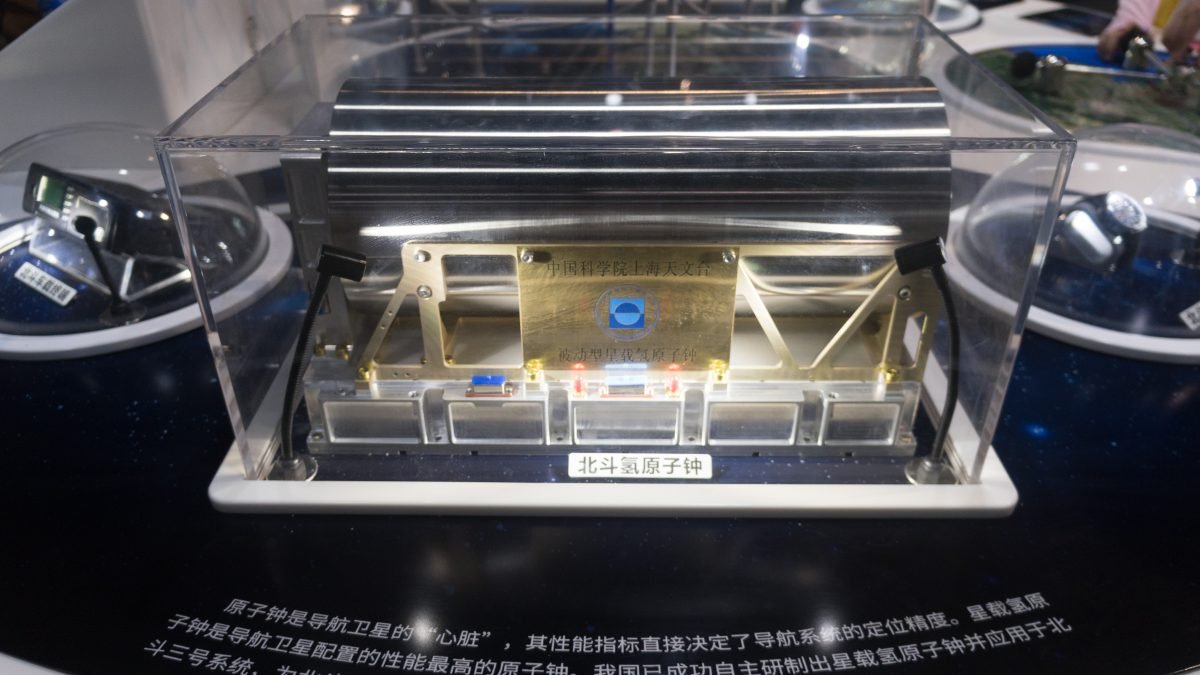
Clocks of this kind rank among the most precise timekeeping tools humanity has produced. They do not rely on moving parts. Instead, they count the very steady frequencies linked to atoms. This precision is vital for systems such as GPS, which uses exact timing to work out locations.
Modern atomic clocks are already sensitive enough to register the small differences in timing that relativity predicts. Such differences can appear between clocks placed only a few millimetres apart vertically. This ability makes them useful for studying effects that were once out of reach.
A new technique and its limits
Lead author Joshua Foo, an associate professor at Kyushu University’s Institute for Advanced Studies, said the team introduced a new way to control the clock’s motion. According to Foo, this could raise sensitivity to the effect by 100 to 1,000 times. The team says this gain could bring the effect within the reach of existing advanced clock technology.
The research remains theoretical. The next challenge is to build a practical experiment. Such a test would need to account for disturbances and uncertainties found in real laboratory conditions. Foo said building that experiment is the next major step.
Wider significance
If experiments succeed, researchers may gain a fresh method for examining the points where quantum theory and relativity meet. Findings of this kind could also shed light on quantum gravity, the still-unfinished theory meant to capture gravity on the tiniest scales. The team says it is also interested in whether atomic clocks could eventually help probe that question.
Frequently asked questions
What did the researchers propose?
The researchers proposed a theoretical method that could allow atomic clocks to detect a quantum superposition of times. The study was published in Physical Review Letters.
Has the effect been observed yet?
No. The work is theoretical, and scientists have not directly observed this link between quantum mechanics and relativity. A working experiment is the next step.
Why could this research matter?
The work could help researchers examine where quantum theory and relativity connect. It might also shed light on quantum gravity, according to the research team.
Sources
This article was written with the help of AI from reports by the outlets listed above. See our Editorial Policy. Spotted a mistake? Tell us.