Shenzhen readies to host APEC leaders as China showcases its growth
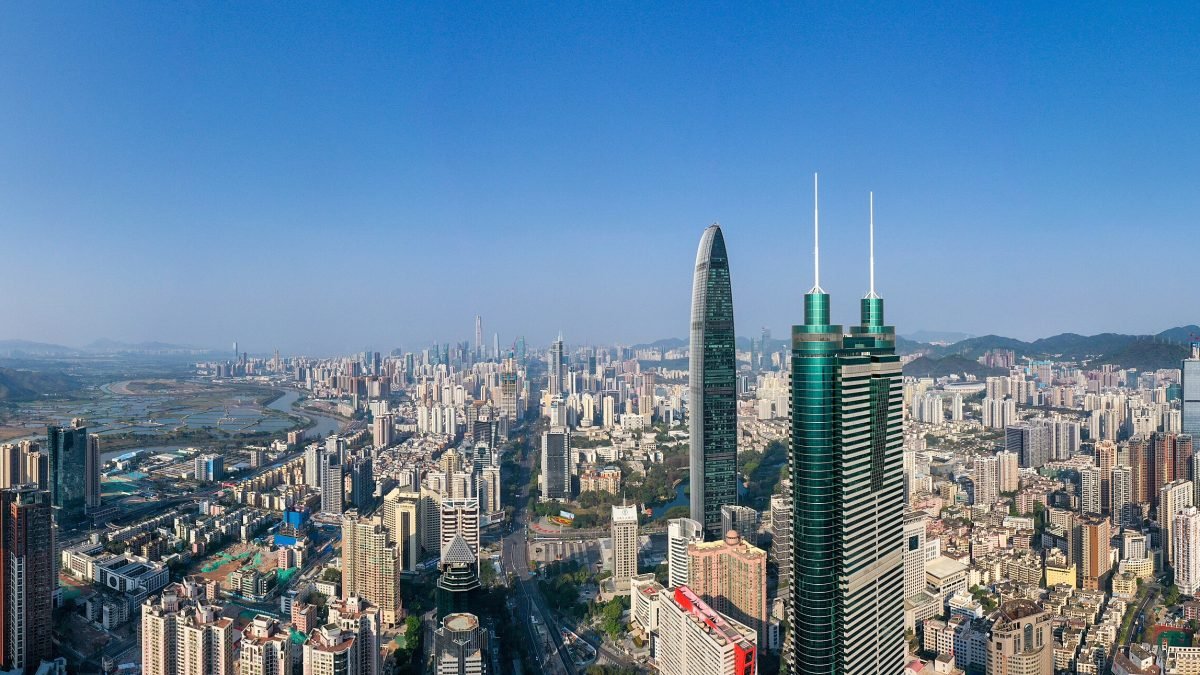
Once a small border town, Shenzhen is now preparing to host one of the year's most watched diplomatic meetings, according to CNA.

Key points
- Leaders from the 21 APEC economies are expected in Shenzhen next week.
- The Economic Leaders' Meeting is scheduled for November 18 and 19.
- Shenzhen is home to Huawei, Tencent, DJI and BYD, according to CNA.
- Analysts say business reforms and redress channels will be the key test.
- Trade tensions between China and the US remain a background issue.
Shenzhen, which started out as a small border town of fishing villages on China’s southern coast, is preparing to host leaders from the 21 Asia-Pacific Economic Cooperation (APEC) economies next week. According to CNA, the gathering is one of the most closely watched diplomatic events of the year. The Economic Leaders’ Meeting is set for November 18 and 19.
Beijing wants the event to present Shenzhen as an emblem of China’s economic change. Analysts told CNA that the city is also meant to show what China can now offer the region. China’s APEC host year is focused on openness, innovation and cooperation.
Read also: Trump, Putin and Xi Plan First Three-Way Meeting in Shenzhen
From special zone to tech hub
Shenzhen has a population of more than 18 million. The city is also home to well-known firms such as Huawei and Tencent, along with drone company DJI and carmaker BYD, which makes electric vehicles. Xu Liping, who studies Asia-Pacific affairs at the Chinese Academy of Social Sciences, said the city has moved from manufacturing to innovation.
The city’s development began in 1980, when it became one of China’s first special economic zones. It was used as a testing ground for market-oriented policies that sought foreign investment, technology and management skills. Late leader Deng Xiaoping made a journey through southern China in 1992, stopping in Shenzhen along the way, and this gave reforms a fresh push. Under President Xi Jinping, the city is now counted among four central drivers of the Greater Bay Area, a plan linking Hong Kong, Macau and nine Guangdong cities.
Questions for foreign businesses
Analysts say the test for businesses is whether the summit produces practical measures they can use. Han Yonghui of Guangdong University of Foreign Studies said companies will look at which entities the rules cover, when they take effect, and how disputes can be resolved.
Singaporean entrepreneur Juana Lee, who runs a consultancy in the city, said Shenzhen offers lower operating costs than Hong Kong and Singapore. She also said newcomers often struggle with local rules and reliable information. Allan von Mehren of Danske Bank said foreign firms still face hurdles including local protectionism and a preference for domestic companies.
Speed from idea to product
Shenzhen’s supply network is one of its main advantages, according to the Chaihuo Makerspace. Its general manager, Ye Yu, described a Singaporean founder who built working prototypes within days of arriving, despite having no soldering experience. Developers can source parts, moulds and small-batch factories in the city.
When Ye joined Chaihuo in 2013, members were mostly hobbyists working with open-source hardware and robots. Today the community includes people in agriculture, education and environmental work who want to build physical products.
Shenzhen Mayor Li Yun said on Saturday that visitor-friendly steps covering immigration procedures, getting around the city, paying for things, schooling and medical care would become lasting if they work well. Analysts said the summit’s outcome will depend on what APEC economies agree, as US-China competition continues to shape trade and technology. Earlier this week, Beijing extended a trade ceasefire with Washington ahead of the meeting. Donald Trump is expected to hold talks with Xi Jinping there, according to CNA.
Related: Kremlin revives demand for new European security order
Frequently asked questions
When is the APEC Economic Leadersu0026#039; Meeting in Shenzhen?
According to CNA, the Economic Leadersu0026#039; Meeting is scheduled for November 18 and 19. Leaders from the 21 APEC economies are expected to attend.
Why was Shenzhen chosen to host APEC?
Analysts told CNA that Shenzhenu0026#039;s shift from a special economic zone to a global technology hub fits Chinau0026#039;s message on openness and innovation. Beijing hopes the city will show Chinau0026#039;s economic transformation.
Is Shenzhen an easy place for foreign businesses?
Some foreign entrepreneurs say costs are lower than in Hong Kong and Singapore. Analysts also say barriers such as local protectionism and preferences for domestic firms still exist.
Sources
This article was written with the help of AI from reports by the outlets listed above. See our Editorial Policy. Spotted a mistake? Tell us.