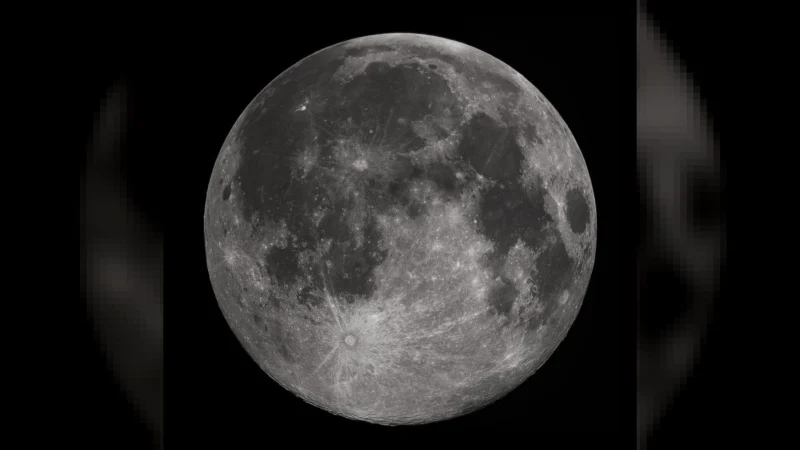
NASA offers $1 million prize for student ideas on Moon Base
Student teams can compete for a $1 million prize by proposing solutions for a planned lunar base near the South Pole.


Key points
- NASA is running a challenge with a $1 million prize for student teams with ideas for a Moon Base.
- Teams must solve problems in six areas, including power, construction, life support and protection.
- Students do not need prior engineering knowledge to take part.
- Sign-ups through the NASA STEM Gateway close on January 25, 2027.
According to ScienceDaily, NASA has opened a contest that awards $1 million to student groups proposing inventive answers for a planned lunar base. Groups can sign up via the NASA STEM Gateway, with entries accepted until January 25, 2027.
The space agency intends to set up a base on the Moon near its southern pole. Crews there would be able to reside, run experiments and survey the nearby terrain. NASA views a permanent foothold on the Moon as a stepping stone toward crewed trips to Mars.
Read also: NASA Sets Out Plan for 2028 Crewed Moon Landing
Six areas of focus
The contest runs in stages. Each team will tackle one of six core demands of keeping a lunar outpost functioning: producing and holding energy, building structures, keeping life support running, getting around the surface, creating communication links and shielding crew members from hazards.
Each area reflects an everyday difficulty that NASA would need to solve before people could stay on the Moon for extended periods. Entries must reflect real surface conditions and mission demands, which shape how daily life and operations would work.
Competitors will assemble documents resembling those used across the space sector. These can include side-by-side reviews of technical choices, design proposals and talks given to project backers.
Who can enter
The organisers welcome applicants from vocational courses, technical programmes and a range of other university subjects. No prior grounding in engineering or a related technical discipline is needed, so the event is open to a wide pool of young thinkers.
The agency also sees the contest as a way to prepare the next wave of aerospace workers. Hands-on design tasks should build teamwork, inventive problem solving and deeper engagement with future spaceflight.
What officials said
NASA Administrator Jared Isaacman said students can start contributing now rather than after finishing their studies. He pointed to curiosity, inventiveness and a readiness to take on difficult questions that lack clear answers as the traits the agency needs.
Carlos García-Galán, manager of the Moon Base Program, said the team wants input on every factor explorers may need while living and working on the Moon. He said students offer fresh viewpoints and the daring concepts the program is hunting for.
Elaine Ho, who holds a senior post in the STEM engagement arm at NASA Headquarters, said young people are the coming generation of space pioneers and inventors. She said their outlook is central to picturing life beyond our planet.
Behind the contest
NASA’s STEM engagement unit created the challenge together with the Moon Base Program. The Institute of Competition Sciences runs the event through a deal with the agency’s Center of Excellence for Collaborative Innovation. That center falls under the Research and Technology Mission Directorate.
Related: Mylar Stacks Could Offer Tough Insulation for Moon Bases
Frequently asked questions
What is the prize amount in NASAu0026#039;s Moon Base contest?
According to ScienceDaily, the prize pot is $1 million. The contest is aimed at student teams with fresh ideas for the planned lunar base.
How do teams sign up for the NASA Moon Base challenge?
Teams need to register via the NASA STEM Gateway. Entries are accepted until January 25, 2027.
Is an engineering background required to take part?
No. Students from vocational, technical and other academic routes are welcome, and prior engineering knowledge is not necessary.
Sources
This article was written with the help of AI from reports by the outlets listed above. See our Editorial Policy. Spotted a mistake? Tell us.